
Jan Dunning
The author of YA thriller The Last Thing You'll Hear on the intoxicating power of music plus some great book recommendations

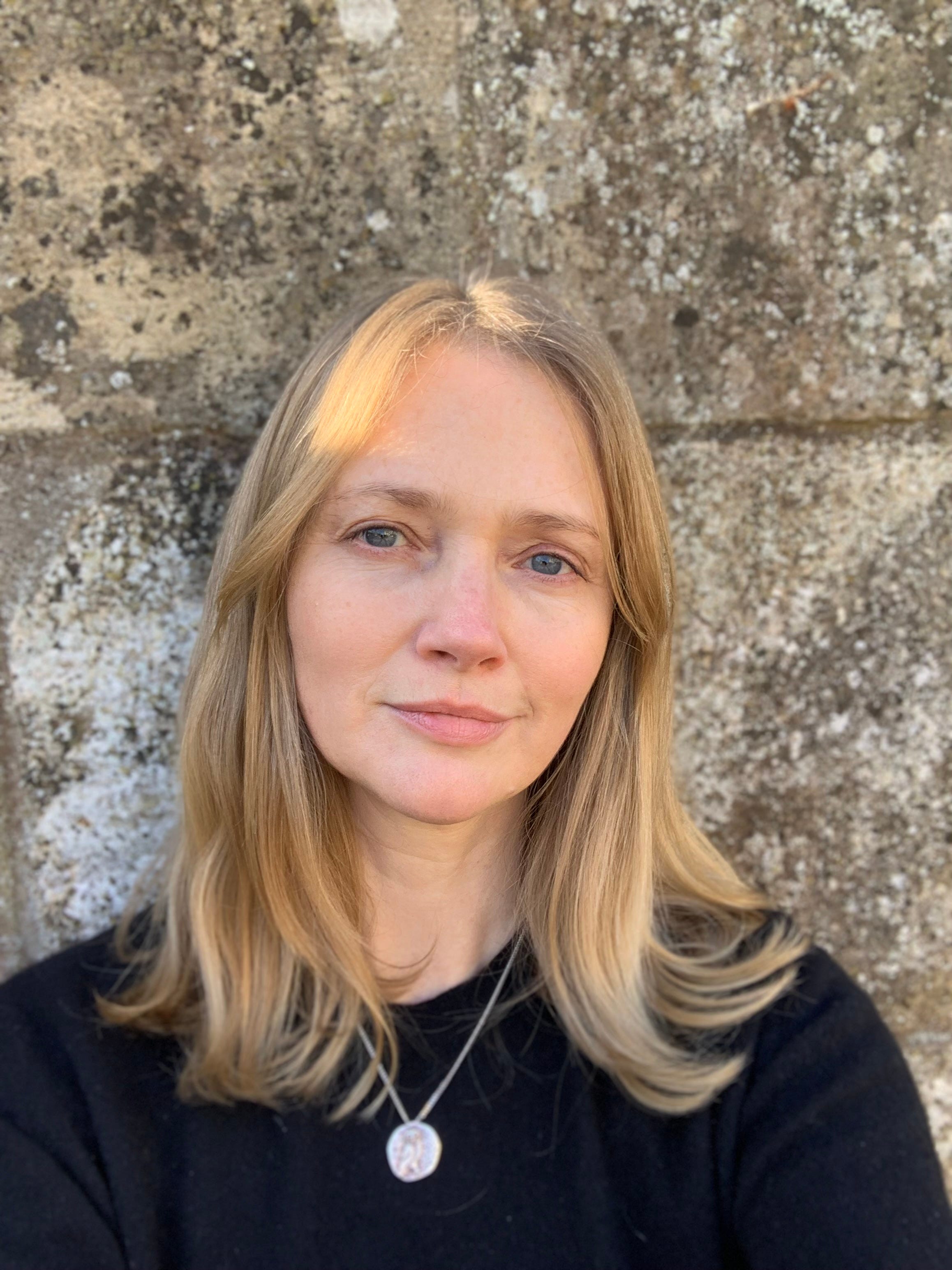
Author Jan Dunning
Jan Dunning is a YA novelist whose work I came across last summer. I went to her book launch at the lovely Mr B’s Emporium in Bath – well worth a visit if you’re ever in that part of the world – where Jan was celebrating the publication of The Last Thing You’ll Hear, which I duly bought and read, torn between racing through it (it’s a great thriller) and savouring it (I love the way she writes about music). It’s the story of Wren and Lark, sisters and rivals, and what happens when mysterious music producer Adam comes to their small town. It’s a gripping, slick story.
An email or two later, and Jan had kindly agreed to speak to me for this newsletter. At which point, an apology and a confession from me. It’s taken me until now to publish our chat, but that’s no reflection of what an interesting time we had, merely of life getting in the way at my end. I’m so happy to share the interview with you now.
We spoke about the power of music to make us feel part of something bigger than ourselves, how to update fairytales and why teenagers become so obsessed with music.
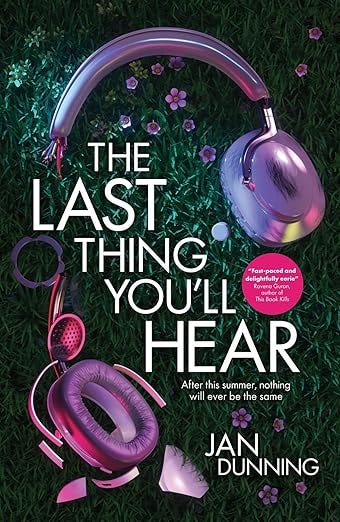
The Last Thing You’ll Hear by Jan Dunning
Has music always been a real passion for you?
I think it has been. I am really privileged and lucky in that I was given music lessons from a young age. I learned to play the piano, took all my grades, and was selected to play the violin, so I had free violin lessons. That was in the '80s and early '90s, when the county council in Shropshire, where I grew up, gave free music lessons to children. I benefited from those, which was amazing.
On my own I’m nothing special at all, but I sang in choirs and played in orchestras and loved that feeling of being part of something bigger and belonging to a group. I knew I wanted to write about that. And not just making music, but also being an enthusiastic listener, a real consumer of music. As a teenager, that became a massive part of my life. It really gave me an identity.
Around the age of 16, I went off to sixth form and fell in with a group of friends who were really into early indie music. This was around 1990 and 1991. They introduced me to this whole world, especially tiny independent labels. We’d go digging for rare 7-inch records, buy fanzines and make mixtapes for each other. We’d spend hours on those tapes and it was like putting together a bit of a story about yourself you wanted to share with somebody.
I loved that feeling of being part of something bigger and belonging to a group.
I knew I wanted to write about that.
In The Last Thing You’ll Hear, your main character, Wren, is a musician…
Actually a really good musician, which took a bit of imagination on my part! But I also wanted to write about what it feels like to be a music lover and be in the crowd. That feeling when you don’t know what the next hour is going to hold but it could potentially change your life. I’ve definitely been to gigs that felt like that. I’d go home totally buzzed and excited, like I’d witnessed something really special.
I don’t want to give any spoilers, but you explore the darker side of music in your novel too. How did you come up with the idea?
This is the second book I’ve written, and my first, Mirror Me, was about image, fashion and photography, which were worlds I’ve worked in for a while. At the core, that book was about finding your identity and how you want to present your image to the world. I thought about music from the same point of view.
I also knew I wanted to write about a festival because I hadn’t seen that done before. I thought it was the perfect setting. It’s a special space where you’re away from your parents, anything can happen and you can be whoever you want to be at a festival. For a teenager, that’s exciting.
I don’t think it’s a spoiler to say that The Last Thing You’ll Hear is a retelling, in a sense, of the Pied Piper of Hamelin. I like that challenge of making a fairy-tale and giving it a modern spin. My first book was inspired by Snow White. In the Pied Piper, there’s this idea of a piece of supernatural music – and that was really exciting. Music is intoxicating. When you’re dancing to a track you love, it takes you out of yourself. You become unselfconscious and fall into a trance.
I thought it wasn’t a big stretch of the imagination to think there could be a dangerous piece of music influencing teenagers. I had been thinking about influence, followings and what it’s like to be part of a crowd. As a teenager, you desperately want to belong, but should you just go along with things to fit in? Is that a good thing, or should you question it more? Those themes were fizzing in my head, and the Pied Piper and music elements pulled it all together.
You write in the acknowledgements that you wanted to include a musician who has hearing loss, who becomes the character Danny in the book. Why was that important to you?
Some of it is to do with the Pied Piper story. In the Brothers Grimm version, of the two children that don’t fall under the Piper’s spell, one is deaf, and the other is blind. I wanted to honour that. And in fact the deaf child alerts the village to the danger. On top of that, my dad is deaf and also is a big music lover, and in his youth was a musician. I wanted to write about music in an inclusive way. Even though I'm a hearing person, I believe music operates on many levels, not just what we can hear. It’s an all-encompassing experience. I wanted to find out what it’s like to make music as a deaf person by talking to people with hearing loss and I talked to my dad about his experience making music with hearing loss.
I think that’s a key message of the book: how music can bring everyone together. I didn’t feel right excluding anyone. My dad had a big influence on my musical education. He’d get his guitar out and make me sing Beatles songs. It’s nice to bring him into the story, as he inspired my character Danny, who is learning to adapt to his hearing loss and thinking about how it affects his musicianship and future.
I think that’s a key message of the book: how music can bring everyone together.
‘When words fail, music speaks,’ as Hans Christian Andersen says, who you quote at the start of the novel. How did you go about the challenge of writing about music?
Some parts of it were really easy to write about, and some were difficult. The easy parts were from my personal experience. For example, there’s a bit where two sisters, who are rivals, remember listening to a song together on headphones. I remembered how that felt and used a real song, ‘The Sound of Silence’ by Simon & Garfunkel. You can’t use lyrics in your writing – well, you could, but it would cost a lot of money. All I could do was describe the atmosphere of the song and hint at what it was about. Then you focus on what the character feels.
When it came to writing about music that doesn’t exist in the real world, that was a little bit harder. Wren writes lots of songs, but one turns out to be significant to the story. Because that’s not something I’d done, I had to learn how to write songs, so I took songwriting courses and I spoke to my friend, Neil Carter, an amazing musician and songwriter. I talked through where song ideas come from, whether he starts with lyrics or chords. I had to learn about chord progressions and how the mood changes. A lot of research went into these parts, and I tested the songs with people who know their stuff.
And how did you go about writing about the ‘dangerous’ piece of music?
The dangerous song, ‘Lullaby’, was similar because it’s not a real song, but it needed to feel like one that a DJ and vocalist could perform at a big festival. It had to have menace. I decided not to include lyrics for this song, and the vocalist, who is the main character’s sister, has an otherworldly, ethereal voice. But then in the end, there is a song that became a sort of template for ‘Lullaby’.
One day, by chance, I was listening to Massive Attack’s album Mezzanine, and the song ‘Teardrop’ came on. I realised that, maybe subconsciously, that was what I was writing – this song with a pulsing, driving beat that’s so compelling, once you hear it, you have to stop what you're doing and tune in completely. Once I realised it was a version of ‘Teardrop’, it really helped me imagine it being performed at a festival and write about it.
Do you listen to music when you’re writing?
When I’m writing, I can’t listen to music. My brain is really geared to respond to music, and if I have music on, I’d just do no writing and listen instead.
But I did listen to music for research around the characters. The main character’s sister, Lark, has this incredible voice, and it’s important that the reader believes her voice is next-level. I had to get that across, and there are only so many ways to describe her swooping voice, the trills, runs. She also needed to sing at different points in the book. So, I listened to singers known for their amazing voices, like Ariana Grande. I wrote notes on what she sounded like and how it made me feel. I think that helps the reader as a little shorthand to understand that Lark’s voice has got to be good as she’s doing an Ariana Grande cover.
The book also features different genres of music. The parents of the two sisters were part of a successful indie band in the mid-to-late '90s. In the story, they get an opportunity to go on a reunion tour. I had a band like Belle and Sebastian in mind, a band I absolutely love. Any excuse, really, to listen to them!
There’s actually a playlist that includes all the songs mentioned, which are all there for a reason, either because I love them or because they hold meaning in the story.
I ask each interviewee to choose three pieces of writing about music that they love or would like to share. What’s your first choice?
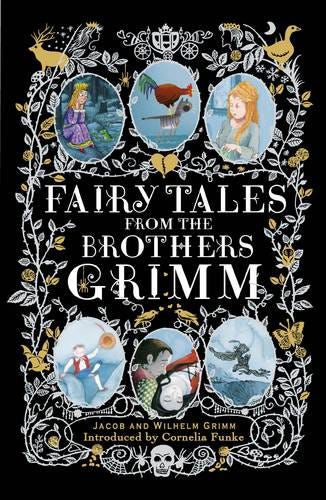
The Pied Piper of Hamelin from Fairy Tales from the Brothers Grimm
Penguin Random House (2012, original stories published in 1812 and 1814)
When I was going through all my YA teen reads about music, I ultimately decided not to talk to you about them! But I can go through a few quickly. Books like Daisy Jones and the Six – that one really immerses you in the music world in a very commercial, compelling way. Then there’s Sophia Bennett's Love Song, a really nice YA novel about a girl and fandoms. Alice Oseman’s I Was Born for This is another great one.
But I wanted to talk to you about the Pied Piper, in the Brothers Grimm’ version, which we’ve already touched on. It was important for me in a lot of ways, partly because I was thinking about how the music is never really described in it. The Pied Piper plays a flute or pipe. It’s only described as ‘hypnotic’ at one point, but it’s really left up to the reader’s interpretation to imagine the music.
He’s a very ambiguous character. In a way, he’s a hero. He comes to the town of Hamelin to get rid of the rats, and he does that through supernatural means, only coming back for the children when they don’t pay him. So he’s been wronged. He’s a menacing character, but you can understand, maybe, why he reacts the way he does. You can see why he has a following; there’s something compelling about him.
It’s quite a dark and difficult-to-interpret fairy tale. It's hard to know whose side you’re on. That openness – both in the music and the character – was interesting for me as a writer to explore.
In the Pied Piper of Hamelin, it’s really left up to the reader’s
interpretation to imagine the music.
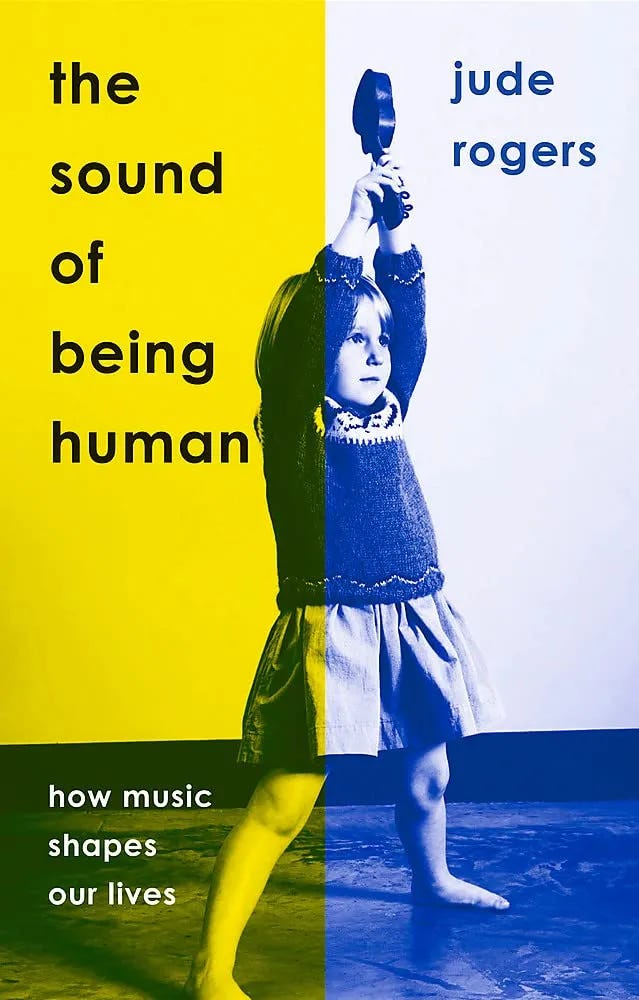
The Sound of Being Human: How Music Shapes Our Lives by Jude Rogers
(Orion Publishing Co, 2023)
I love Jude Rogers’s book so much. I read this before I wrote anything on my story, and it was recommended to me by a really old friend who I met as a teenager and we used to go to gigs together. I absolutely love the way Rogers, who is a music journalist, writes about music because it’s so deeply personal.
The way she’s structured the book is brilliant. It’s like a mixtape and she takes you through her life one track at a time. It must have been impossible for her to choose.
Before starting reading a new chapter, I would go and listen to the song she was writing about. It made me feel closer to her while reading. But you don’t need to do that because she writes about music in a way that brings whichever track she’s talking about alive for you.
Her writing is really personal, but at the same time really well-researched. She’s talked to psychologists, sociologists and neuroscientists to explore why music makes us feel the way it does, but she always pulls it back to her own experience.
The chapter I love the most, actually, is about teenage obsession, the one on R.E.M. The track she picks is Drive, and the chapter is called something like 'Music Obsesses Us as Teenagers.' That chapter was just everything to me. She totally gets it right, the way you’re totally obsessed with reading sleeve notes and lyrics and analysing them. You’re more likely to listen to what Michael Stipe whispers through your headphones than anything anyone else says to you. It feels like you have this personal relationship with the artist.
And artists also open up amazing doors for you. There are things you take from them. I remember looking at all The Smiths album covers, and how they shaped my own style for a while. Suddenly a lead singer you admire talks about a film they love, and you want to watch it too. Rogers just captures that so well.
And on top of that, she talks about being a teenager and the dopamine and oxytocin you get from being in a crowd where everyone gets it like you do. The power of the fandom, if you like. I just loved that – and I love that book.
Imagine – Jacob Collier: In the Room Where It Happens
Something that was really influential while writing The Last Thing You’ll Hear was an episode of Imagine, where Alan Yentob interviews Jacob Collier. It’s so good. It’s called In the Room Where It Happens, and it’s just... well, Collier is amazing. Such an incredible and talented musician. It’s a rush watching that episode and getting an insight into his talent.
But what I really love about Jacob Collier and his work is how generous he is with music. I love his audience choir [in which Collier gets the whole audience singing]. He’s sharing his talent and what music means to him and what music can be.
In this Imagine episode, they don’t talk about the audience choir – I think it was before he started including that in his gigs – but he did a really lovely thing to finance one of his records. It was a crowdfunder where he invited people to send him 15–20 seconds of themselves singing anything and he offered to harmonise with them. Not just harmonise simply, but in multiple times in different ways. It must have taken so long. What he makes out of it is something beautiful. I love this collaborative, community work.
When I was writing my book, I knew I needed a big, punch-the-air finale for my main character – I won’t spoil it – but I drew heavily from Jacob Collier. He’s got that generosity of spirit combined with his amazing talent. That’s what music should do.
The Last Thing You’ll Hear is out now.
You can buy all the books mentioned at Bookshop.org, which supports local bookshops and writers. These are affiliate links which means I get a small amount of money if you buy a book via one of the links. Thank you if you do that. Every little helps to keep this Substack going!
The Pied Piper of Hamelin from Fairy Tales from the Brothers Grimm
The Sound of Being Human: How Music Shapes Our Lives by Jude Rogers
Jan! Thank you so so much for this xxx
Ordered! This sounds fascinating, and a possibility for a teenage girl in our extended family.